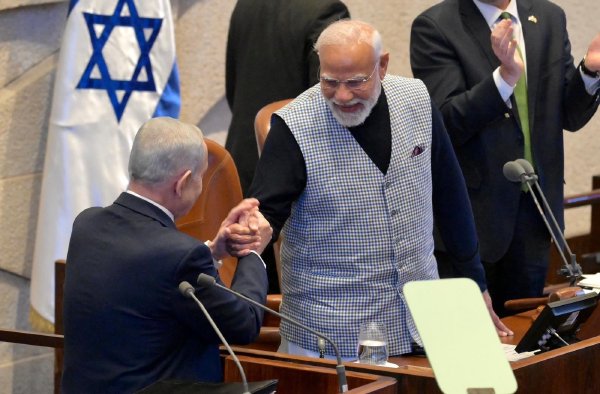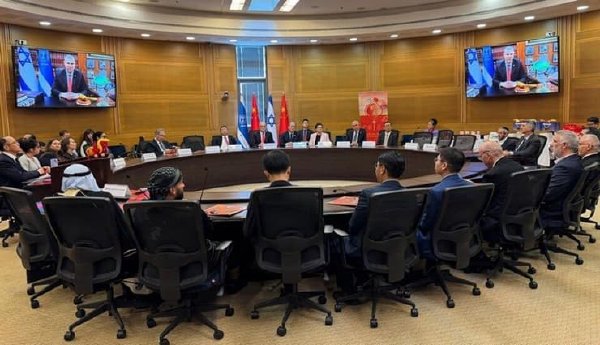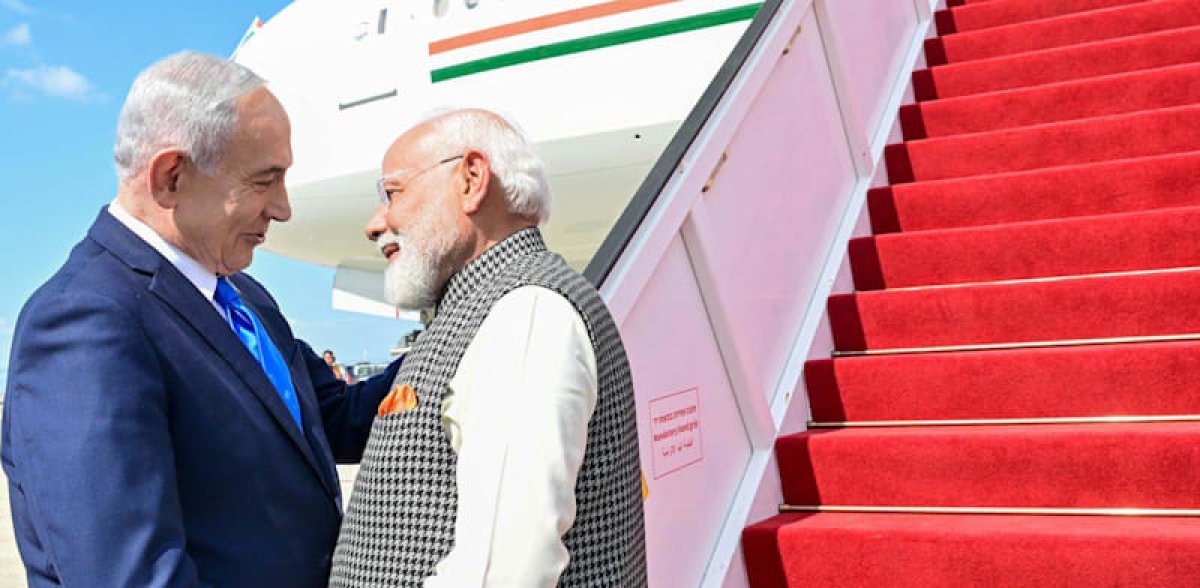
Indian Prime Minister Narendra Modi wrapped up a historic two-day state visit to Israel on February 26, during which the two countries signed 16 memorandums of understanding spanning artificial intelligence, cybersecurity, agriculture, fintech, education, labor mobility, and cultural cooperation. The visit formally elevated bilateral ties to a “Special Strategic Partnership for Peace, Innovation, and Prosperity.”
Key Agreements#
The 16 MoUs cover a wide range of sectors reflecting the breadth of the India-Israel relationship:
- Artificial Intelligence & Cybersecurity: A general AI cooperation framework and a letter of intent to establish an Indo-Israel Cyber Centre of Excellence in India, focusing on digital resilience, AI, and joint exercises.
- Agriculture: A flagship agreement to create the India-Israel Innovation Centre for Agriculture (IINCA), operated jointly by India’s ICAR and Israel’s MASHAV. The center will focus on precision farming, satellite-based irrigation, integrated pest management, and post-harvest technologies, along with 20 joint research fellowships.
- Education: An MoU between the two countries’ education ministries on advancing education through AI, covering innovative teaching methods and teacher development.
- Financial Services: India’s UPI digital payments system will be linked to Israel’s payment infrastructure for cross-border remittances, alongside a fintech and regtech cooperation agreement between the two countries’ financial authorities.
- Labor Mobility: A commitment to bring up to 50,000 Indian workers to Israel over the next five years.
- Cultural Exchange: A three-year program (2026–2029) covering music, theatre, dance, visual arts, and festivals, plus academic exchanges between Nalanda University and Hebrew University of Jerusalem.
- Other areas: Geophysical exploration, fisheries and aquaculture, commercial arbitration, maritime heritage development, and horizon scanning for strategic foresight.
Joint Statements#
Speaking at the King David Hotel in Jerusalem after the signing ceremony, Prime Minister Benjamin Netanyahu described the visit as “short but very productive and exciting,” adding that the two countries are working on “concrete plans” and that another meeting between the countries’ leaders will take place in India.
Modi thanked the Knesset, where he delivered a historic address, and said that stepping once again on the “historic and inspiring soil of Israel” was an emotional moment for him. He dedicated a medal he received from the Speaker of the Knesset to “1.4 billion Indians and the friendship between India and Israel.”
“This friendship is built on deep foundations of democratic and human values,” Modi said. “Our ties have stood the test of time. Today, we have taken a historic decision to elevate our long-standing partnership to a special strategic partnership, symbolizing the aspirations of our two peoples.”
Free Trade and the IMEC Corridor#
Modi announced that the two countries will soon complete a new free trade agreement, with the first round of negotiations already held in New Delhi. He also said the talks covered advancing the India-Middle East-Europe Economic Corridor (IMEC), a major infrastructure initiative launched in 2023 that would connect India to Europe via the Gulf states and Israel through rail, shipping, energy, and digital networks. Israel plays a key role as a transit point in IMEC’s Northern Corridor, with the Haifa port serving as a hub for ship-to-rail transfers toward Mediterranean Europe.
Counterterrorism and Regional Peace#
Both leaders emphasized their shared stance on counterterrorism. “We both agreed that terrorism has no place in the world, regardless of its form or expression,” Modi said. “We will continue to stand shoulder to shoulder against terrorism and its supporters.” He added that India supports efforts to promote peace in Gaza and will continue dialogue with countries in the region.
Modi described the visit as an “important milestone,” noting that Israel-India ties continue to deepen across security, agriculture, water, development, and employment, driven primarily by cooperation between the peoples of the two countries.
Source: Globes