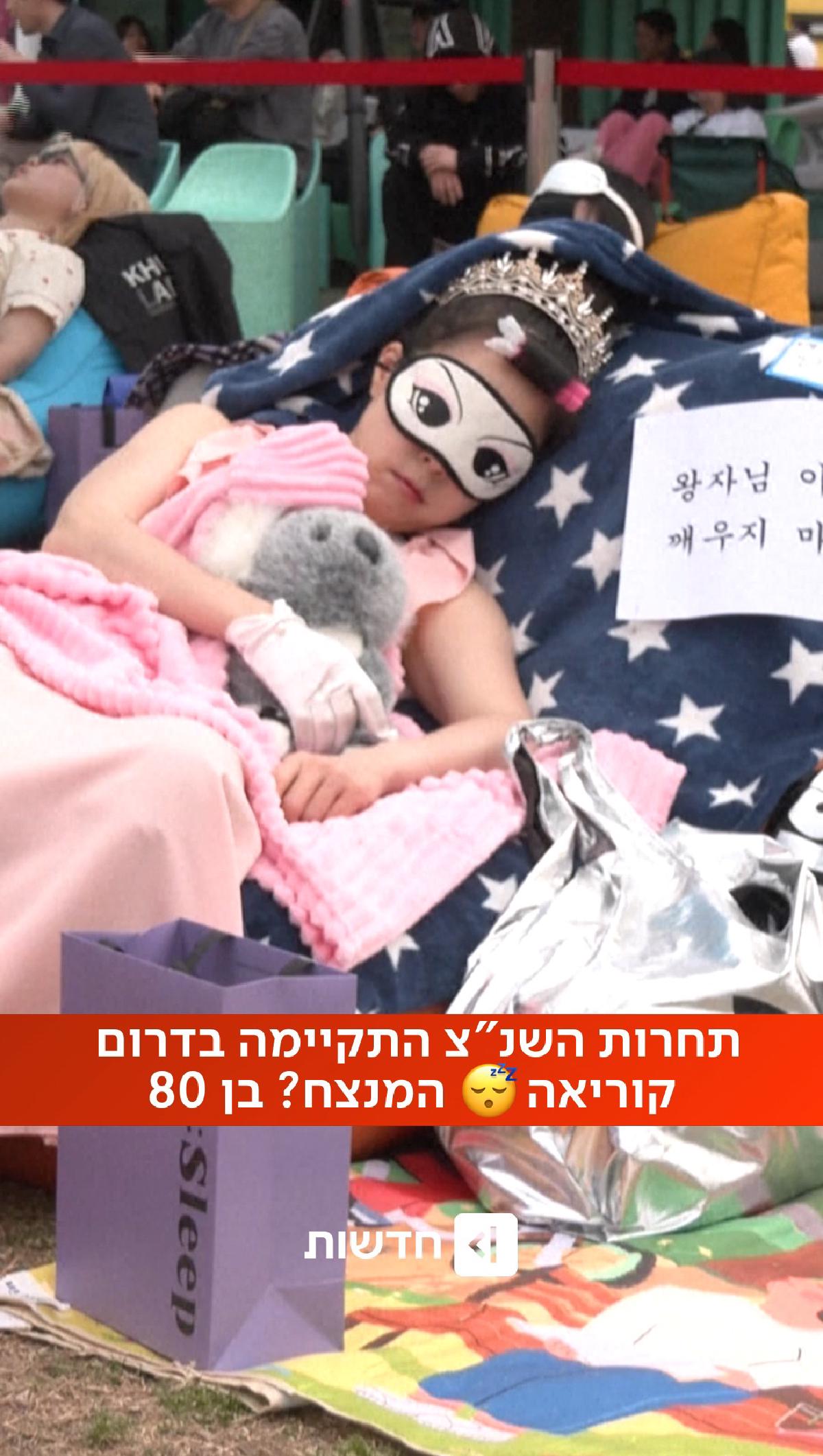
Seoul hosted its third annual power nap (afternoon nap) contest this weekend at Han River Park, drawing hundreds of participants of all ages dressed in pajamas and creative sleep costumes, exhausted and eager to compete for the deepest, most peaceful sleep.
The timing is notable for Israeli readers: South Korea and Israel share surprising parallels as nations with mandatory military service, regional security pressures, and work cultures that prize intensity. Both countries rank among the most overworked in the OECD, with Israeli tech workers and Korean office workers alike reporting chronic sleep deprivation.
For the Korean community in Israel—estimated at several thousand workers, students, and residents—the contest may resonate differently. Many Korean caregivers, hotel workers, and tech professionals in Israel work demanding schedules that mirror what their compatriots face back home.
Organized by the Seoul Metropolitan Government, the contest began at 3:00 PM as participants lowered eye masks across the lawn. Judges measured participants’ heart rates before and after sleeping to determine who maintained the most stable rhythm—a key indicator of deep, restorative sleep.
The surprising winner of the contest was an 80-year-old man, who achieved the most stable heart rate. The runner-up was Hwang Du-seong, a 37-year-old office worker, who said: “I was completely drained after many night shifts at work and frequent driving. When I saw the contest, I was determined to sleep and recharge in the river breeze, and I’m very happy to take second place.”
Participants stood out with creative costumes: a 20-year-old student dressed in a crimson robe of a Joseon Dynasty monarch, and a 24-year-old English teacher from Ilsan who wore a plush koala onesie hoping to “borrow a little of the koala’s magic for deep sleep.”
The contest highlights a chronic issue in South Korea—the country ranks among the most overworked and sleep-deprived OECD nations. Many students and workers report getting only 3-4 hours of sleep per night, relying on daytime naps at the office or university to get by.
Seoul, a city that runs 24/7 with round-the-clock shopping malls, competitive hustle culture, and high iced Americano consumption, sees the contest as an opportunity to encourage residents to rest and prioritize their health.
Napping Cultures: Korea vs. Israel#
The nap competition highlights a stark contrast in how the two nations view daytime sleep. In South Korea, napping is deeply normalized—nearly 60% of office workers report taking regular afternoon naps, and many companies provide dedicated nap rooms or “relaxation zones.” The government’s sponsorship of a nap contest reflects a societal consensus that rest is essential for productivity, not a sign of weakness.
In Israel, attitudes are far more ambivalent. While tech companies like Google Israel and local startups have introduced nap pods, the broader work culture—shaped by the dugri ethos of constant activity—often stigmatizes daytime sleep. A 2024 survey found only 12% of Israeli workers take regular naps, with most citing fear of being perceived as lazy. The Israeli comments on the Korean contest (“Does he have a pulse?” “Let him come to Israel, we’ll toughen him up”) reflect this underlying skepticism: napping is often framed as unproductive, even comical.
For the Korean community in Israel, this cultural gap is tangible. Korean caregivers working 24/7 shifts, or students balancing part-time jobs, often find themselves caught between their home culture’s acceptance of napping and Israel’s expectation of non-stop hustle. As one Korean expat in Tel Aviv told us: “In Seoul, taking a 20-minute nap after lunch is normal. Here, if I nap during my break, my colleagues joke that I’m ’turning Korean again.'”
What This Means for Asians in Israel#
The viral video and its Israeli comment section reveal a cultural gap that affects Asian communities living in Israel daily. Korean students at Israeli universities, Thai workers in construction and caregiving, and Chinese professionals in the tech sector all navigate between their home cultures’ emotional norms and Israeli expectations of toughness.
When an Israeli comments “let him come to Israel, we’ll toughen him up” on a video of a crying Korean bus driver (see our previous article), or mocks an 80-year-old Korean man’s tearful victory in a nap contest, it reflects the same cultural lens. For Asians in Israel, adapting often means learning not just Hebrew, but also the dugri culture of emotional restraint.
The nap contest also highlights workplace pressures familiar to many in Israel’s Asian community. Korean caregivers working 24/7 shifts, Thai construction workers facing dangerous conditions, and Filipino nurses in understaffed hospitals—all experience the exhaustion that drove hundreds to compete for a prize for sleeping.
Israeli Audience Reactions#
The post by Kan News garnered hundreds of reactions from Israeli followers, ranging from humorous to curious:
- “Go compete” - a playful encouragement to join the contest
- “Does he have a pulse?” - a humorous jab about the elderly winner
- “No parents of small children were found among the participants” - a wry observation about the contest demographic
- “Enough already, this is a competition? They sleep max 8 hours and much less during the day!” - a critical take on the sleep duration
- “My dream… literally” - a pun on the Hebrew word “חלום” (dream, both sleep dream and aspiration)
- “I can sleep for three days” - a relatable comment from a sleep-deprived follower
Source: Kan News | Photo: Reuters | Additional credit: The Straits Times